By Benjamin Garcia | June 2025
Poland’s presidential election 2025 has emerged as a critical juncture not only for the country but for the entire European Union. As one of the EU’s most populous members and a key player in Central and Eastern Europe, the direction Poland chooses will ripple through the political, economic, and security landscape of the continent.
The Election at a Glance
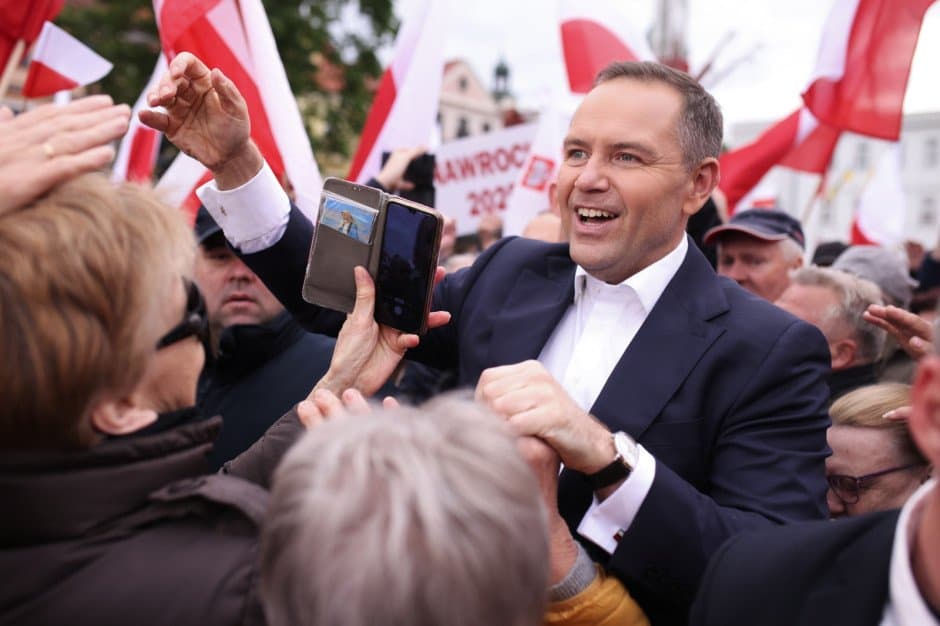
The Poland election saw a close contest between the liberal incumbent, Rafał Trzaskowski, former Mayor of Warsaw, and the nationalist challenger, Karol Nawrocki, a political newcomer with strong backing from conservative factions. Preliminary results reveal a narrow victory for Nawrocki, with approximately 51% of the vote, against Trzaskowski’s 49%, reflecting a deeply polarized electorate.
Voter turnout was notably high, reaching nearly 73%, signaling heightened public interest and the gravity of this Poland presidential election 2025 for the nation’s future.
Poland’s next president Karol Nawrocki won the presidential election also among the Polish diaspora in the USA.
The Trump-supported national-conservative candidate won 56.65% of the votes against the liberal Warsaw Mayor Rafał Trzaskowski’s 43.35% of the votes.
🇵🇱🇺🇸 pic.twitter.com/Hbud9iz1Hx
— Visegrád 24 (@visegrad24) June 2, 2025
What the Election Results Signal for Poland
The presidency in Poland holds substantial influence, including veto power over legislation and key appointments. Nawrocki’s rise signals a shift towards a more nationalist, conservative agenda aligned closely with the ruling Law and Justice (PiS) party’s ideals. Here’s Key domestic implications includes:
01. Judicial independence: Nawrocki is expected to continue PiS-backed reforms that critics argue undermine judicial independence, potentially heightening tensions with the EU.
02. Media freedom: Concerns remain over increasing government influence on media outlets, with potential further crackdowns on independent journalism.
03. Social policies: Conservative social policies, including restrictions on reproductive rights and LGBTQ+ issues, may gain momentum.
Long lines have formed at many polling stations abroad, where Polish citizens can vote in today’s presidential election runoff.
In Prague, pictured below, people have reportedly been waiting hours to cast their vote pic.twitter.com/hZvk1dpKjV
— Notes from Poland 🇵🇱 (@notesfrompoland) June 1, 2025
Implications for the European Union
Poland’s relationship with the EU has been strained over the last decade, largely due to conflicts over the rule of law and democratic norms. Nawrocki’s presidency may intensify these challenges:
01. Rule of law and funding: The EU has tied significant funding to compliance with democratic standards. Further judicial reforms may lead to more funding suspensions, affecting Poland’s economy.
02. EU integration: Nawrocki advocates for national sovereignty and may resist deeper EU integration efforts, contrasting with Trzaskowski’s pro-EU stance. This could complicate EU-wide policy initiatives.
03. Security and foreign policy: Poland, as a frontline state regarding the Russia-Ukraine conflict and NATO’s eastern flank, faces intense scrutiny. Nawrocki’s policies on defense cooperation and support for Ukraine will be closely watched by EU and NATO partners.
European Leaders React
European Commission President Ursula von der Leyen commented, “Poland remains a vital partner in the European project. We hope that the newly elected president will engage constructively to uphold our shared values and strengthen our union.”
Meanwhile, German Chancellor Olaf Scholz urged for dialogue, “Poland’s stability and commitment to the EU are essential for Europe’s future. We stand ready to cooperate closely.”
What This Means for Europe’s Future
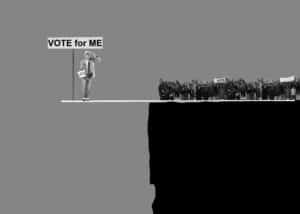
The Poland presidential election results are not just a local political event; they represent a critical flashpoint for Europe’s ongoing struggle to balance unity and sovereignty. As the EU grapples with internal divisions, Poland’s path forward will have far-reaching consequences.
The Ideological Divide in Europe
The election epitomizes the tension between two competing visions for Europe’s future:
-
Pro-EU integrationists, like Rafał Trzaskowski, advocate for deeper political and economic integration, strengthening supranational institutions, and adhering strictly to EU democratic norms.
-
Nationalists and sovereigntists, represented by Karol Nawrocki and the conservative Law and Justice (PiS) party, emphasize national sovereignty, traditional social values, and skepticism towards centralized EU authority.
According to a 2024 Eurobarometer survey, 62% of Polish citizens expressed dissatisfaction with the current state of democracy in the EU, with 54% concerned about loss of national identity. These sentiments fuel nationalist momentum, mirrored in election results.
Economic Stakes and EU Funding
Poland is the largest beneficiary of EU structural funds, receiving approximately €86 billion from 2014–2020 to support infrastructure, innovation, and social programs. The European Commission’s 2023 Rule of Law Report highlighted ongoing concerns about judicial independence and media freedom in Poland, threatening continued access to this funding.
If tensions escalate, the EU could suspend or reduce financial transfers, dealing a significant blow to Poland’s economy. According to an Oxford Economics report, such a funding freeze could reduce Poland’s GDP growth by up to 1.2% annually over the next five years.
Security and Geopolitical Implications
Poland sits on NATO’s eastern flank, making it vital for European and transatlantic security, especially amid ongoing tensions with Russia and the war in Ukraine. The Polish government’s support for Ukraine has been a cornerstone of EU and NATO strategies in the region.
Karol Nawrocki’s ambiguous stance on further NATO expansion and Ukraine’s membership introduces uncertainty. As NATO Secretary-General Jens Stoltenberg noted in early 2025, “Poland’s commitment to collective defense is essential for maintaining stability in Europe. We hope for continued strong partnership regardless of political changes.”
Influence on European Populism and Nationalism
Poland’s election is closely watched as a bellwether for populist and nationalist movements elsewhere in Europe. The European Council on Foreign Relations (ECFR) warned in their 2025 report that rising nationalist rhetoric in Poland could inspire similar electoral shifts in Hungary, Italy, and France, potentially reshaping the EU’s political map.
Expert Perspectives
Dr. Katarzyna Szymielewicz, co-founder of the Helsinki Foundation for Human Rights in Poland, commented:
“The election outcome signals a crucial moment. It reflects a population torn between embracing European values and safeguarding national traditions. The EU must engage Poland constructively to uphold democratic standards without alienating its citizens.”
Meanwhile, European Commission Vice President Věra Jourová said:
“Poland’s trajectory will test the EU’s ability to defend rule of law while respecting member states’ sovereignty. It’s a delicate balance but essential for Europe’s cohesion and future.”
A Crossroads for Poland and Europe
Poland’s presidential election 2025 is more than a national event; it is a bellwether for Europe’s political direction. As Poland navigates its internal divisions and external relationships, the broader European community watches closely.
Will Poland reaffirm its commitment to European unity, or will it chart a more independent, nationalist course? The answer will shape not only Poland’s destiny but also the future of the European Union itself.
FAQs:
Q. Who is the new president of Poland in 2025?
A) Rafał Trzaskowski, representing the Civic Coalition, narrowly won re-election with 51.3% of the vote.
Q. What does Poland’s 2025 election mean for the EU?
A) It marks a return to pro-European policies, potentially easing tensions over judicial reforms, climate goals, and migration.
Q. How will this affect Ukraine and NATO?
A) Poland will remain a strong NATO ally, continue support for Ukraine, and maintain defense ties with the U.S.
Q. Is populism dead in Poland?
A) Not quite. Although Nawrocki lost, the conservative base remains large. The 2027 parliamentary elections will be the next big test.
You Can Read This Also:
Kaʻula Island Under Fire: Military Bombing in Hawai‘i Sparks Environmental and Cultural Backlash